By Lanre Oloyede
The Federal Government of Nigeria has commended the Joint National Association of Persons with Disabilities (JONAPWD) for producing what he described as a reliable and comprehensive database of Persons with Disabilities (PWDs) in Nigeria.
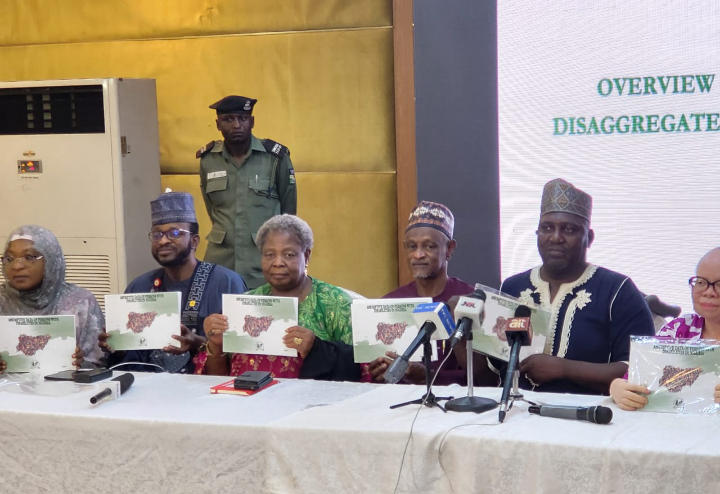
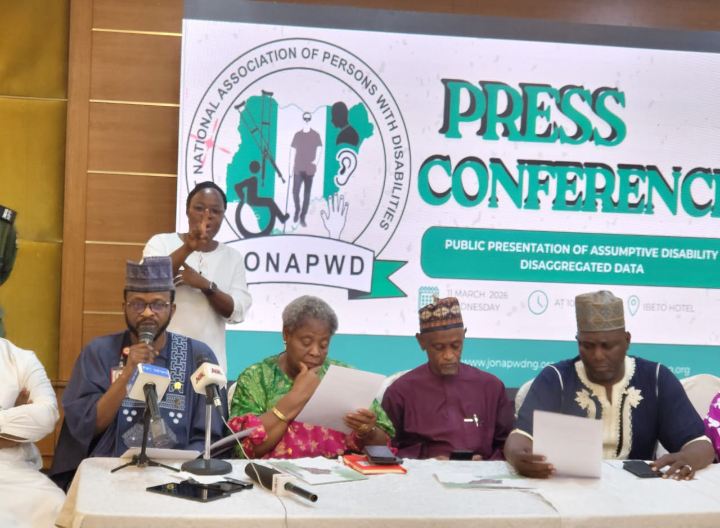
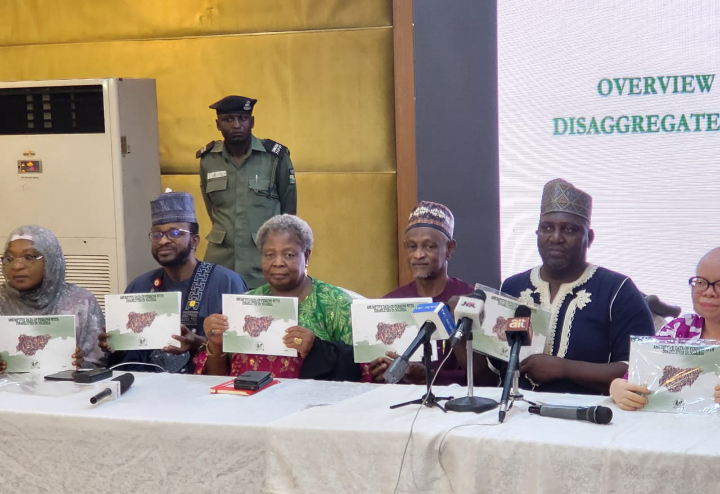
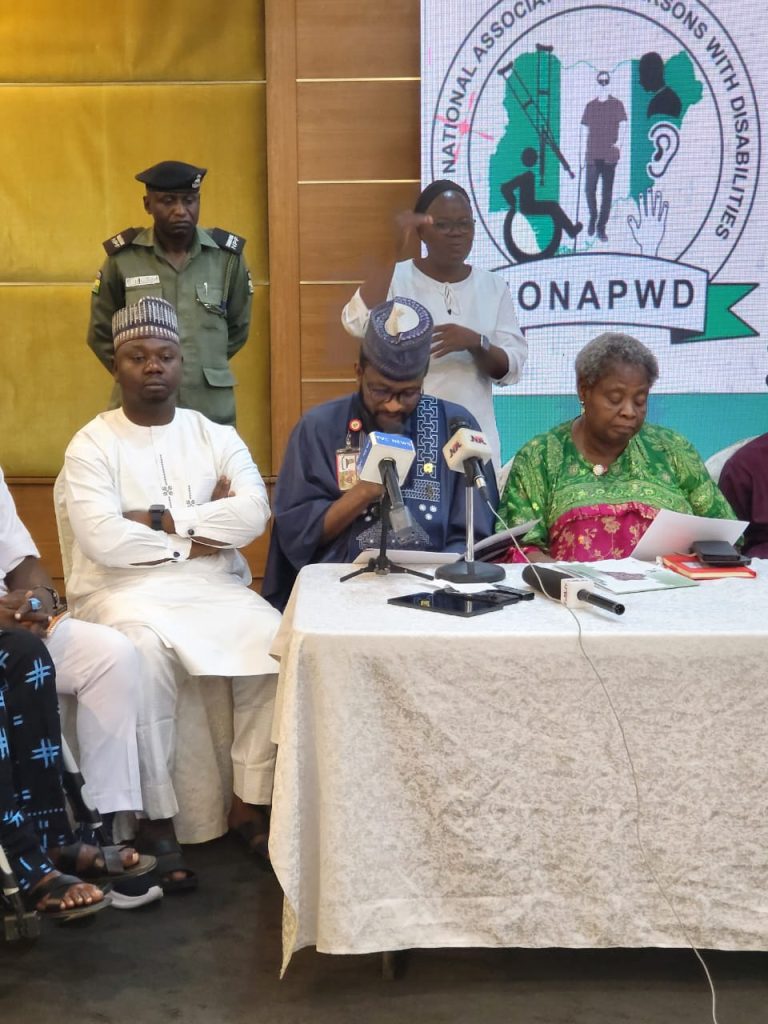
The Senior Special Assistant to the President on Special Needs and Equal Opportunities, Hon. Mohammed Abba Isa, gave the commendation on Wednesday during a press conference to unveil the Exploratory Disability Disaggregated Data for Persons with Disabilities in Nigeria, a landmark publication compiled by JONAPWD.
According to Abba Isa, the document represents a significant milestone in the collective effort to advance inclusive development and evidence-based policymaking for Persons with Disabilities across Nigeria.
He noted that for many years, the absence of credible, comprehensive, and disaggregated data on Persons with Disabilities has remained one of the most critical challenges confronting policymakers, stakeholders, and development partners.
While various figures have often been cited—some estimating the population of PWDs at about 25 million and others projecting between 35 and 40 million—he said such numbers were largely based on conjecture or fragmented information.
“Without reliable data, even the best intentions toward inclusion cannot translate into measurable impact,” he said.
According to him, data remains the foundation for effective planning, policy formulation, project implementation, and the achievement of development objectives.
Abba Isa explained that the 2025 projection contained in the report estimates that the population of Persons with Disabilities in Nigeria is in the neighbourhood of 35 million, with detailed disaggregation across the 36 states of the federation and the Federal Capital Territory.
He revealed that Kano State has the highest estimated population of Persons with Disabilities at approximately 2.5 million, closely followed by Lagos State with about 2.1 million.
The presidential aide also highlighted the importance of the report’s breakdown by disability clusters and gender.
According to the findings, the Physical Disability cluster constitutes the largest group with about 8.2 million persons, followed closely by the Deaf community, which accounts for approximately 7.7 million persons.
In terms of gender distribution, the data indicates that male Persons with Disabilities number over 17.6 million, while female Persons with Disabilities account for approximately 17.2 million.
“These insights provide critical clarity about the diversity and scale of the disability community in Nigeria,” he stated.
He noted that for the first time, stakeholders and development partners now have access to a structured and disaggregated dataset capable of guiding targeted interventions.
Abba Isa commended the leadership and members of JONAPWD for what he described as a bold initiative aimed at addressing one of the most persistent barriers to inclusive development—the absence of a credible disability database.
“As the foremost umbrella body representing Persons with Disabilities in Nigeria, JONAPWD has demonstrated vision and commitment by tackling this long-standing challenge,” he said.
He added that the database would serve as an invaluable resource for policymakers, development agencies, researchers, and advocates working to advance disability inclusion in Nigeria.
The presidential aide also noted that the initiative supports the Federal Government’s ongoing efforts to establish a statutory and official database for vulnerable populations, including Persons with Disabilities.
He emphasized that the administration of President Bola Ahmed Tinubu recognizes the critical role of data in governance, research, and policy formulation.

According to him, under the Renewed Hope Agenda, the Federal Government remains committed to supporting initiatives that generate credible evidence and strengthen the capacity of institutions to design inclusive policies and programmes.
Abba Isa assured that his office would continue to collaborate with stakeholders, development partners, and organizations of Persons with Disabilities to promote initiatives that strengthen inclusion, accessibility, and equal opportunities across all sectors of national life.
Addressing participants at the event, the National President of JONAPWD, Abdullahi A. Usman, described the newly unveiled report as a landmark development for disability advocacy and inclusive governance in Nigeria.
Usman noted that for years, efforts to advance the rights and welfare of Persons with Disabilities had been hampered by the absence of dependable demographic data.
According to him, the lack of accurate statistics made it difficult for policymakers and stakeholders to design effective policies and programmes that truly address the needs of the disability community.
He stressed that the availability of reliable information is essential for informed decision-making, strategic planning, and the development of inclusive policies that ensure no one is left behind.
“Without credible statistics to guide planning and policy formulation, the goal of inclusion becomes difficult to achieve in practical terms,” he said.
The report, he explained, relies on the widely recognized global estimate that about 15 percent of every country’s population lives with some form of disability, a benchmark adopted by both the World Health Organization and the United Nations.
Also speaking at the event, the Executive Secretary of the National Commission for Persons with Disabilities (NCPWD), Ayuba Burki Gufwan, represented by Hajiah Fatima Doki, emphasized that development partners often insist on reliable and verifiable data before committing support to programmes and interventions.
She noted that the newly released dataset is particularly important because it provides the type of evidence that international partners require when considering investments in disability-focused initiatives.
Doki also acknowledged that the Commission has faced financial limitations in conducting a comprehensive nationwide data exercise but added that efforts are ongoing to collaborate with development partners to support such initiatives in the future.
In his remarks, a representative of the National Population Commission, Comrade Onah Adeyi, said the estimated 35 million Persons with Disabilities in Nigeria represents not only a demographic reality but also a major constituency capable of influencing national development.
According to him, when effectively organized and engaged, the disability community could become a powerful voice in shaping democratic outcomes and leadership in the country.
“If properly mobilized, persons with disabilities possess the numerical strength to influence who emerges as leaders at different levels of governance,” he said.
Adeyi further explained that the disaggregated dataset will be instrumental in guiding government planning, budgetary allocations, and the implementation of targeted programmes aimed at improving the wellbeing of Persons with Disabilities across Nigeria.
