
By Lanre Oloyede
The Senior Special Assistant to the President on Special Needs and Equal Opportunities, Hon. Mohammed Abba Isa, has unveiled a comprehensive set of strategic recommendations aimed at ensuring the effective implementation of the African Disability Protocol (ADP) in Nigeria.
Speaking at a high-level roundtable on the national implementation of the ADP, Hon. Abba Isa, represented by his Director Media and Communications, Mr Lanre Oloyede, lauded President Bola Ahmed Tinubu, GCFR, for his unwavering commitment to inclusive governance. He emphasized that the President’s leadership continues to drive progress towards equity, dignity, and empowerment for marginalized populations, especially persons with disabilities.
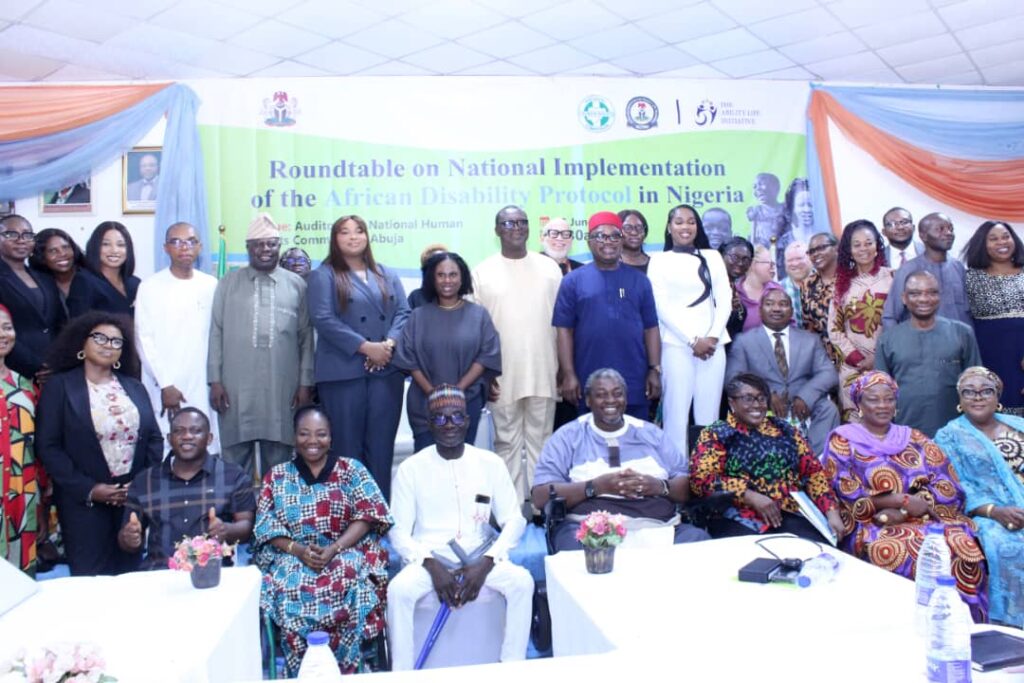
He commended the National Human Rights Commission (NHRC), the National Commission for Persons with Disabilities (NCPWD), and The Ability Life Initiative (TALI) for convening the timely forum, which he described as aligned with the Renewed Hope Agenda of the current administration—one that prioritizes the inclusion, protection, and empowerment of all Nigerians.
May 2024 marked a landmark moment in Africa’s human rights history, as the African Disability Protocol officially came into force, following Nigeria’s historic step as the 15th country to ratify the treaty. President Tinubu signed the Instrument of Ratification in October 2023, reaffirming Nigeria’s leadership in advancing disability rights on the continent.
“With over 30 million Nigerians living with disabilities, and millions more across Africa, this Protocol provides a transformative framework to advance their rights within the unique African socio-cultural context,” Hon. Abba Isa stated.
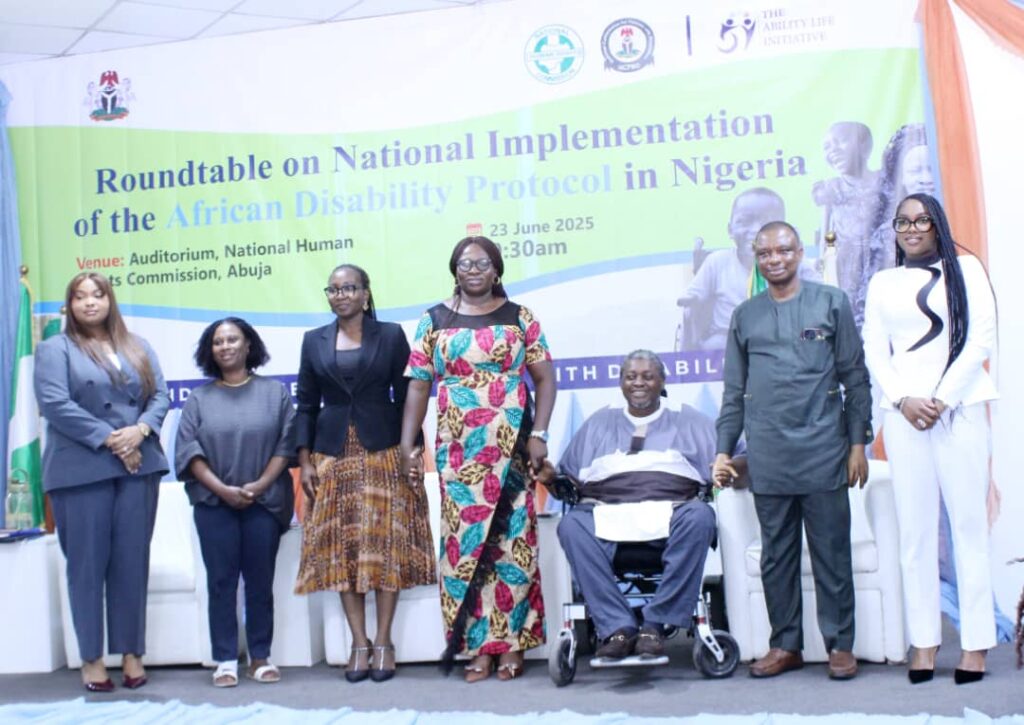
Since assuming office in November 2023, Hon. Abba Isa has led several reforms targeting inclusive education, healthcare, employment, accessibility, and political participation—anchored on President Tinubu’s Renewed Hope Agenda.
He announced that his office is currently:
- Developing a National Accessibility Framework,
- Engaging MDAs to adopt inclusive recruitment practices,
- Supporting programs that empower women and girls with disabilities, and
- Partnering with international bodies to build technical expertise in disability rights.
The African Disability Protocol distinguishes itself by recognizing Africa’s diverse cultural realities and emphasizing issues such as harmful cultural practices, accessibility, protection against violence, and inclusion of women, children, and youth with disabilities.
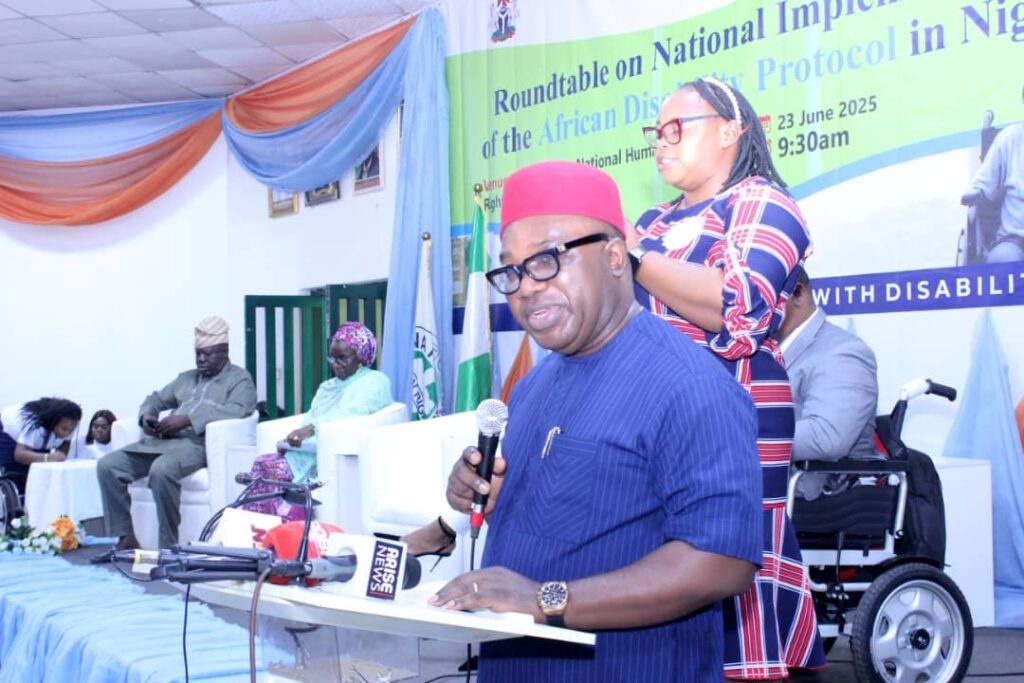
Hon. Abba Isa highlighted key actions required for Nigeria to lead by example in the Protocol’s implementation:
- Harmonizing national laws and policies with the Protocol,
- Accelerating implementation of the National Disability Act (2018) across all states and the FCT,
- Establishing enforcement mechanisms against violence and discrimination,
- Enhancing accessibility in infrastructure and communication, and
- Ensuring disability inclusion in national planning and development programs
He emphasized that Nigeria must also serve as a model for other African countries by inspiring domestication of the Protocol continent-wide, advancing the African Union’s Agenda 2063, attracting global support for disability-inclusive development, and reinforcing Nigeria’s image as a champion of human rights.
Key Strategic Recommendations Made by the SSA Include:
- Awareness and Public Enlightenment
- Launch national campaigns using accessible formats such as sign language, braille, and local dialects.
- Integrate the ADP into school curricula and civil service training.
- Engage traditional and religious leaders to combat stigma.
- Legal and Policy Framework Evaluation
- Conduct a nationwide legal audit.
- Establish a technical working group led by the NHRC and NCPWD.
- Ensure state-level domestication and effective monitoring of the Disability Act.
- Stakeholder Dialogue and Engagement
- Institutionalize quarterly multi-stakeholder forums.
- Utilize digital platforms for inclusive consultations, especially in underserved regions.
- Strategic Roadmap Development
- Launch a National Implementation Framework for the ADP.
- Mainstream the Protocol into the 2025–2030 Medium-Term National Development Plan and the upcoming National Social Protection Policy.
- Research and Monitoring
- Set up a disability rights observatory unit.
- Promote academic research to document gaps and good practices.
- Implementation Mechanism
- Establish a National Steering Committee with federal, state, and civil society representation.
- Allocate a dedicated budget line for ADP implementation at all government levels.
In his closing remarks, Hon. Abba Isa reaffirmed the Tinubu administration’s dedication to ensuring that no Nigerian is left behind.
“The African Disability Protocol is more than a treaty—it is a pledge of justice, equality, and inclusion. Now is the time to turn that pledge into practical action and to build a Nigeria where disability is not a limitation but a platform for innovation and national growth,” he concluded.
